Home
Our Process
Portfolio
FAQ
Where can I see your previous work?
Check out our portfolio at AppMakersLA.com/portfolio
What services do you offer?
We are a Los Angeles app and web development company. As such, we offer: 1) Design for Apps, Webapps and Websites 2) Mobile App Development for iPhone Apps, Android Apps and iPad Apps & Web Development for Webapps. Each project includes full QA Services as well as a product manager.
Where are your app developers located?

Our app developers are mainly located at 1250 S Los Angeles St, Los Angeles, CA 90015, though we have other offices around the world, and we hire the best developers wherever and whenever we find them. If having engineers & designers in Los Angeles is critical to the project, we have the resources to make that happen.

How much do you charge for your services?
Our cost varies depending on the project. Please contact us for a mobile app development consulting session and we will get you an estimate + analysis pronto.
Can you build software for startups?
Yes, we consider ourselves a startup app development company, as well as an agency that builds software for already established firms.

Discover 30+ more FAQs
View all FAQs
Blog
Contact ussms IconCall Icon
We answer our phones!
Popular Apps / Psychology Behind Successful...

Psychology Behind Successful Freemium Apps: Why Users Stay and Upgrade

The psychology behind successful freemium apps is the reason you keep opening something you never planned to pay for.

The best freemium products land an early win fast, then turn that win into a repeatable routine. You get small rewards, a sense of progress, and just enough personalization to feel like the app “knows” you. Over time, your playlists, history, streaks, or settings start to feel like yours, so paying feels like protecting something you already own, not buying something new.

In the next sections, you’ll see how those levers work, and why they work on almost everyone.

Key Takeaways

  • Freemium apps leverage psychological ownership by giving real value for free, increasing loyalty and willingness to pay for optional upgrades.
  • Habit loops built from cues, routines, and rewards create predictable usage patterns that raise daily engagement and long-term retention.
  • Thoughtful paywalls use gentle, behavior-based friction and value anchoring to feel fair, driving higher conversion without eroding trust.
  • Personalized, timely nudges and variable rewards align with user goals, sustaining interest and making premium features feel naturally desirable.
  • Ethics, transparency, and user feedback foster trust, strengthening retention and supporting sustainable monetization over manipulative or exploitative tactics.

What Makes Freemium Apps So Sticky?

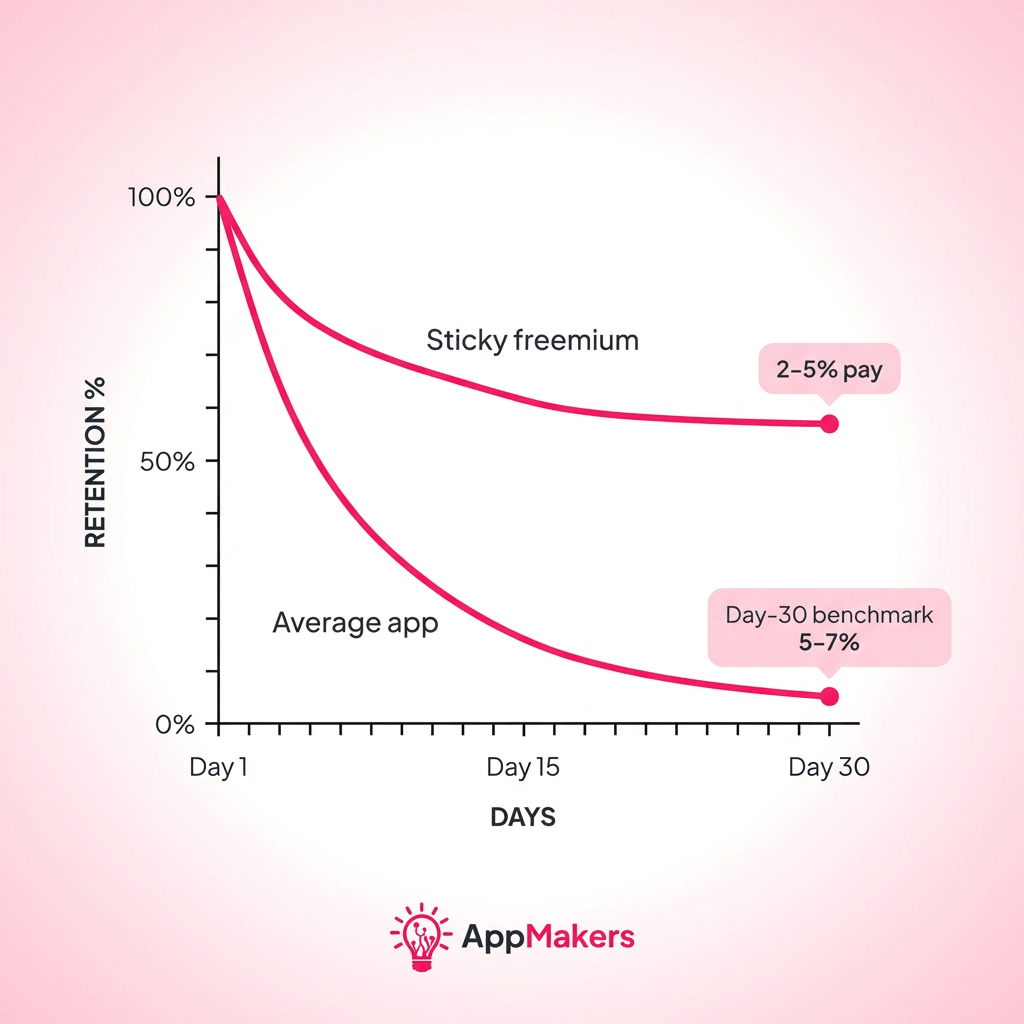
a deck-style chart with callouts that shows the concept of “Retention and conversion reality”

Even when most apps lose over 90% of users within 30 days, the freemium ones that win keep people coming back because they are engineered around psychology, not just features. 

In most freemium businesses, only 2–5% of users ever convert to paid, so the free experience has to do the heavy lifting. It needs to build trust, momentum, and a reason to return, long before a paywall matters.

Day-30 benchmarks are often around 5–7%, and categories like digital banking can reach roughly 11.6%, which shows how much upside there is when value is clear and delivered consistently. The free tier works because it removes risk. Users can explore, see results, and build comfort before they are asked to pay.

If retention really is five times cheaper than acquisition, then that early confidence compounds into healthier LTV:CAC and more referrals. For B2C brands, especially those investing in Los Angeles-focused apps, this retention advantage compounds as localized engagement turns loyal users into repeat buyers and advocates.

AppMakers USA helps teams turn these benchmarks into lean flows that make “staying” the obvious default for the users who matter most.

Ownership Psychology in Freemium Apps

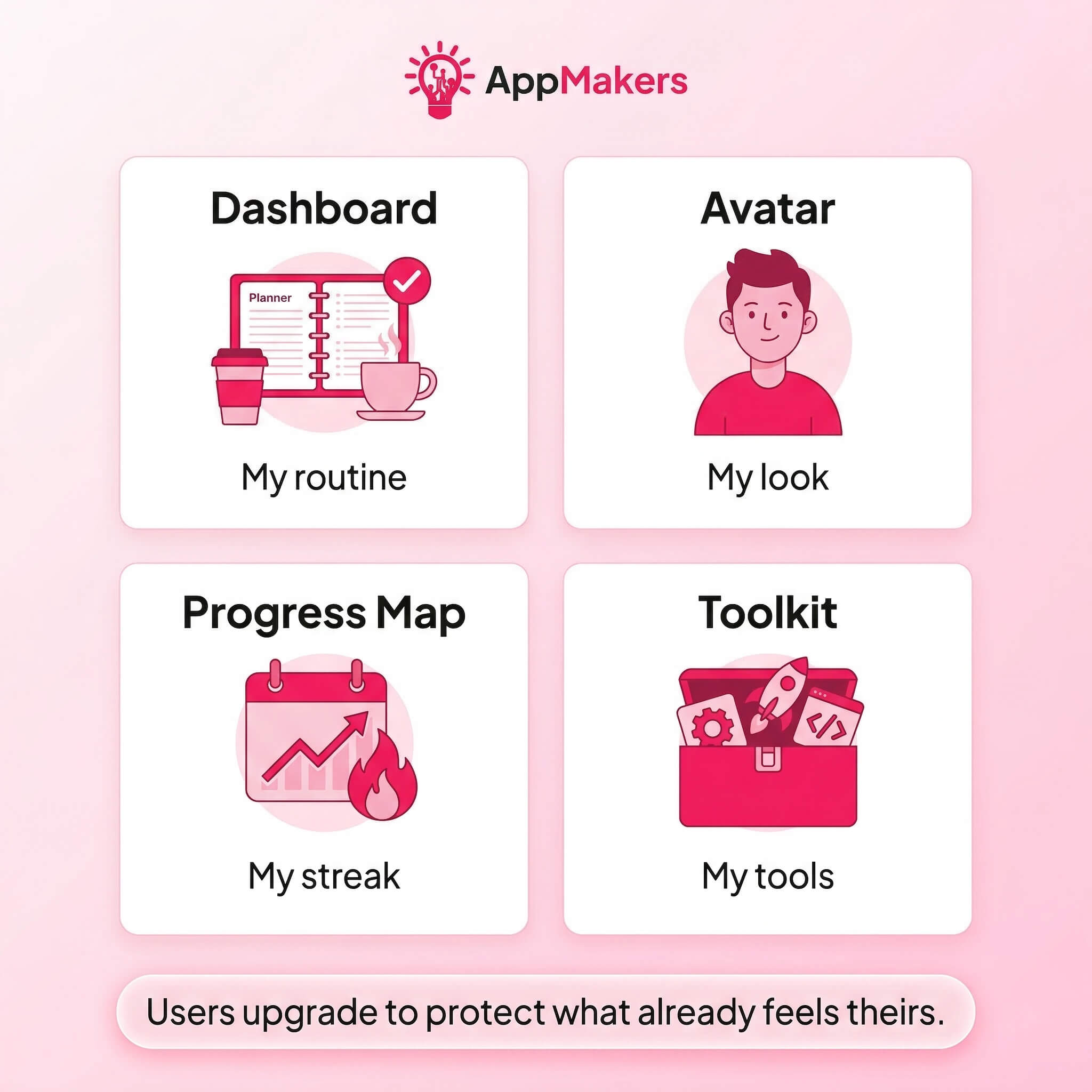
a four tiles labeled Dashboard, Avatar, Progress Map, Toolkit

Sticky freemium apps do not just get users to return. They get users to feel like the product is already theirs. You are not selling access. You are building psychological ownership, that sense of “mine” that shows up before anyone pays. 

It works best when the free version is genuinely useful on its own, and premium is framed as an optional upgrade, not a gate that blocks basic value. When users help shape features, purchase intention rises (total effect 1.866), and this growing sense of psychological ownership consistently predicts higher loyalty and repurchase intention in digital products. 

So, your free tier should offer authentic value, but keep advanced capabilities visibly beyond the paywall. 

For example, in our work on android app development for San Diego organizations, we structure freemium tiers so core tools feel genuinely owned while more advanced modules scale with user needs and business growth.

Ways that shows up in product design:

  • A dashboard that adapts to their routines
  • An avatar wardrobe tied to their identity
  • A progress map filling with their achievements
  • A toolkit where premium slots sit beside free ones

When we layer in AI-driven personalization and prediction, the app can adapt in real time to user behavior, reinforcing that sense of ownership while increasing retention and revenue.

Designing Habit Loops for Freemium Users

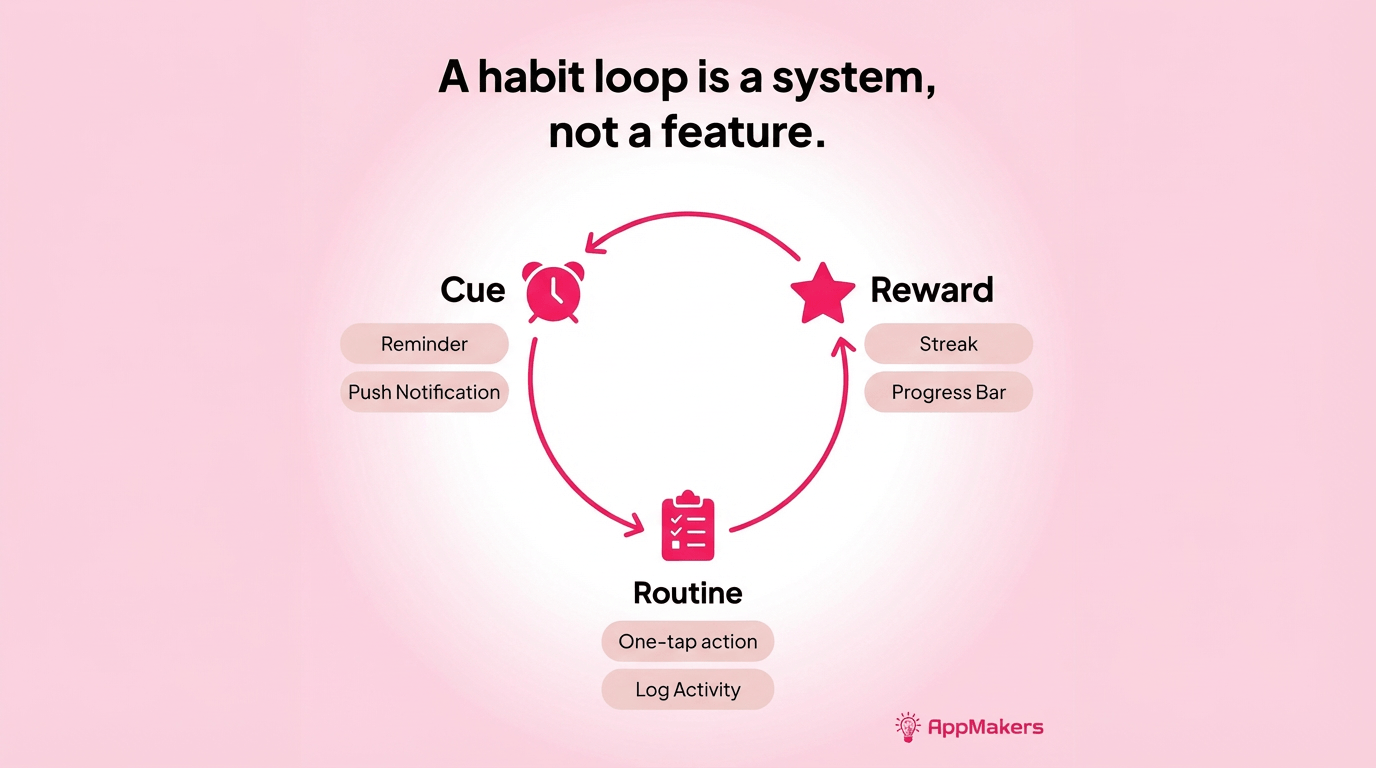
a circular loop with 3 nodes: Cue, Routine, Reward

When you design habit loops for freemium users, you are not chasing installs. You are engineering routines that show up in retention and DAU. The difference between a “nice app” and a sticky one is whether users have a reliable reason to come back. 

Start with clear triggers, then pair them with quick rewards that matter. Notifications, contextual prompts, and timely reminders work when they lead to a meaningful next tap, not a random screen. Progress visualization helps too because users can see momentum building, which makes the routine easier to repeat.

The other trap is building loops around flashy extras instead of core use cases. When the loop reinforces the main job your app does, engagement supports conversion naturally.

Let’s explore more of that below.

Triggering Consistent User Routines

Most freemium teams obsess over features and funnels. The growth engine is whether you can engineer a habit loop, cue, routine, reward, that users repeat without thinking too hard about it. When every feature has a clear behavioral job, the product gets easier to grow and easier to measure.

To trigger consistent routines, start by pairing an external cue with an ultra-simple action. A notification should lead directly to the next meaningful tap, not a menu or a vague prompt. Over time, those cues shift inward. Users open the app during a commute, a break, or while planning their day because the loop has become familiar. 

Variable rewards help, but they need to match real user goals so the experience feels satisfying, not gimmicky. In products where personalization shapes what a user sees next, each session can feel fresh enough to repeat. 

In dating apps, features like AI-powered matchmaking and tailored profile prompts help ensure each session feels uniquely rewarding and worth repeating. The paid boosts and gamified challenges can be woven into these loops to both deepen engagement and unlock durable revenue streams.

AppMakers USA typically designs these loops data-first, then builds the tech around what actually drives repeat use. 

The Loop Behind Repeat Usage

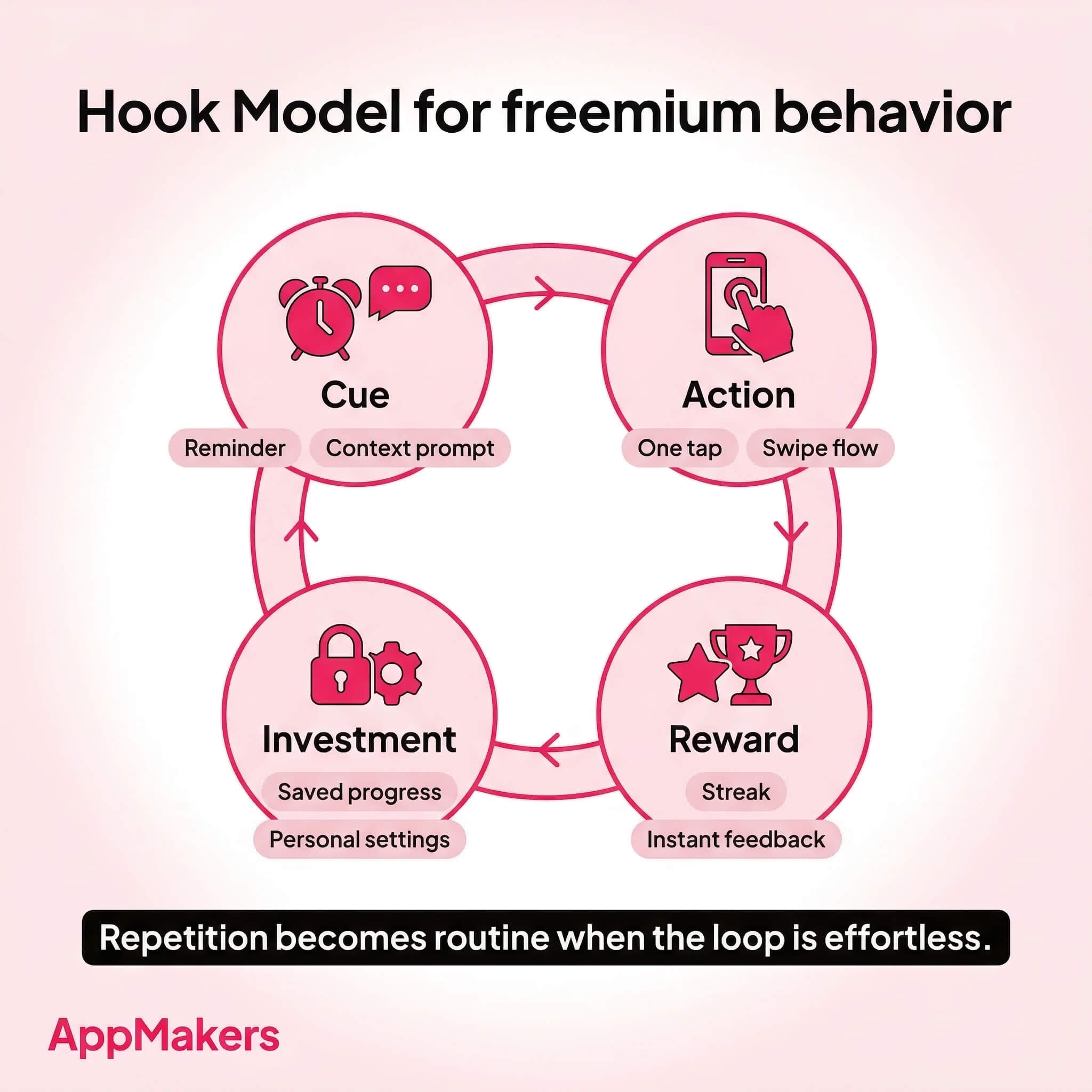
a 4-node circle labeled Cue, Action, Reward, InvestmentYou do not just want users to start a routine in your app. You want them to feel pulled back into it. 

This draws from the Hook Model, aligning cues, actions, rewards, and user investment into a repeatable loop. The practical goal is a tight habit loop where you have a clear cue, an effortless action, and a reward that actually matters. 

This same structure underpins many successful health app development projects, where engagement loops support long-term wellness and telemedicine usage. 

Keep the action lightweight. Single-tap flows and intuitive swipes make repetition feel automatic. Once that loop is stable, you can align it with monetization moments so an upgrade offer feels like a continuation of progress, not a random interruption. Then reinforce the behavior with instant feedback, streaks, and small celebrations. Aim for at least 21 consecutive uses as a milestone to build momentum.

Design these loops consciously, using analytics to refine which rewards genuinely sustain long-term use across segments, cohorts, and evolving behaviors. You also need to prioritize ethical design so that your reward systems encourage positive user habits without becoming manipulative or exploitative.

FOMO and Reciprocity Without Burning Trust

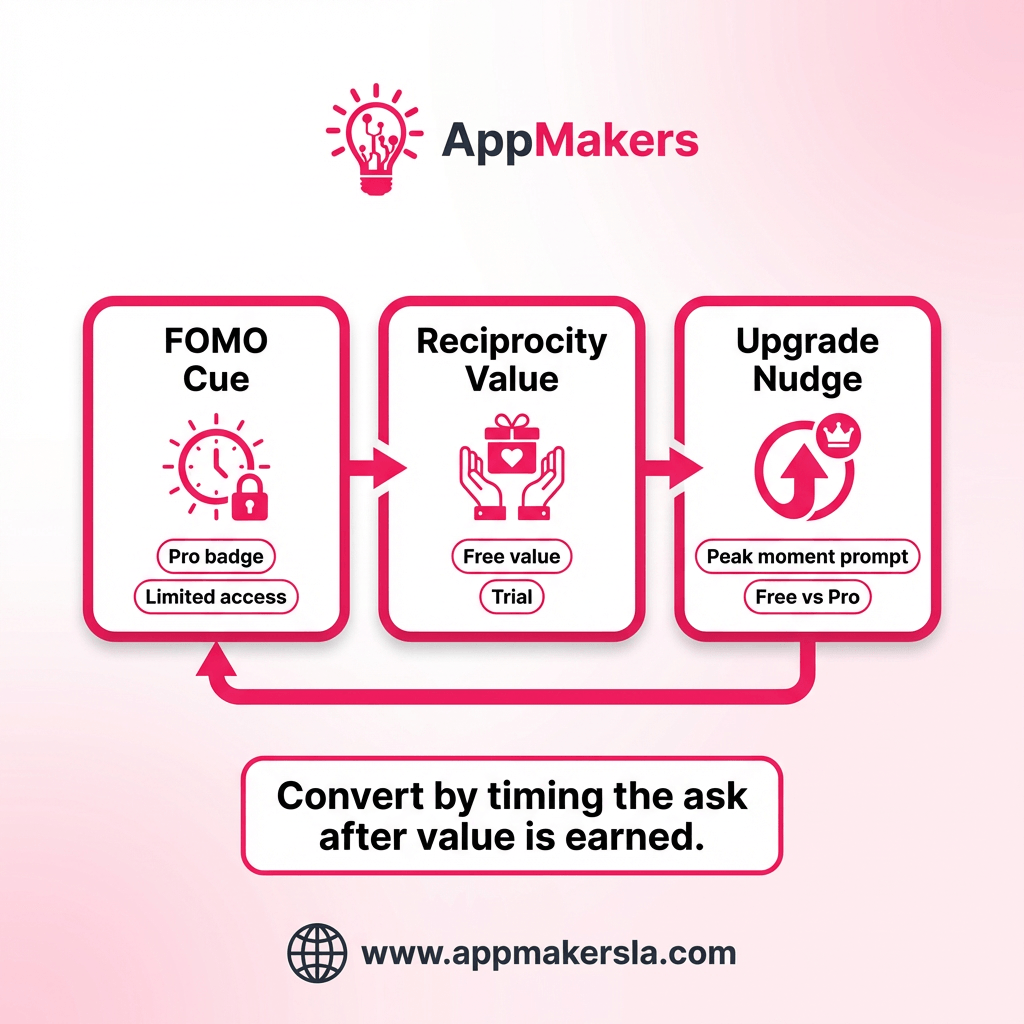
a 3-node loop with labels like FOMO cue → Reciprocity value → Upgrade nudge

The freemium apps that monetize best do not rely on features alone. They build a loop of FOMO, reciprocity, and well-timed upgrade prompts that nudges behavior without feeling random. 

FOMO works when you spotlight what a user might miss such as pro-only badges, exclusive filters, faster responses, early access. Higher FOMO links to more compulsive, addiction-like platform use, with social comparison (β=0.54) tied to problematic usage. 

A scoping review of 106 studies found consistent links between FoMO, negative affect, and digital technology overuse, which is why scarcity prompts can convert so reliably.

Then you layer reciprocity. Free value plus a fair trial makes users more willing to pay because it feels like a reasonable exchange, not a trap. To design this loop, you might visualize:

  • A countdown on expiring access
  • “Free vs pro” side-by-side comparisons
  • Notifications highlighting upgrades
  • Contextual prompts at peak engagement

Price Perception Beats Price Tags

a 4-step horizontal timeline

Smart freemium pricing is less about the number on the paywall and more about what that number feels like. When you anchor pricing to clear value, not just dollars, you shape what “fair” means and make it easier to convert the small slice of users who will ever pay. 

The goal is not a hard wall. It is gentle, behavior-based friction that shows up right when users hit a meaningful limit, not an arbitrary one. This approach helps maintain a large user base while still driving recurring revenue from those who convert.

Why “Free” Sets the Baseline

Most successful freemium apps do not just set a price. They design price perception, and anchoring is the lever that makes it work. You lead with “free” to spike installs, then anchor every upgrade against that zero baseline so users feel like they are gaining value, not being charged out of nowhere.

Instagram’s success in scaling targeted advertising to a projected $71 billion in 2024 shows how powerful perceived value can be when pricing and access are anchored around “free.” Users feel they’re gaining value, not being charged. A/B testing allows teams to systematically refine these anchors based on real user behavior rather than assumptions.

Data from freemium markets shows a ceiling around $120 to $140 before conversion drops. That is why strong freemium pricing frames upgrades as protecting what users already enjoy, not buying something new. 

Clear niche positioning reinforces the anchor because the value of premium becomes easier to justify.

The Small Screen That Decides Revenue
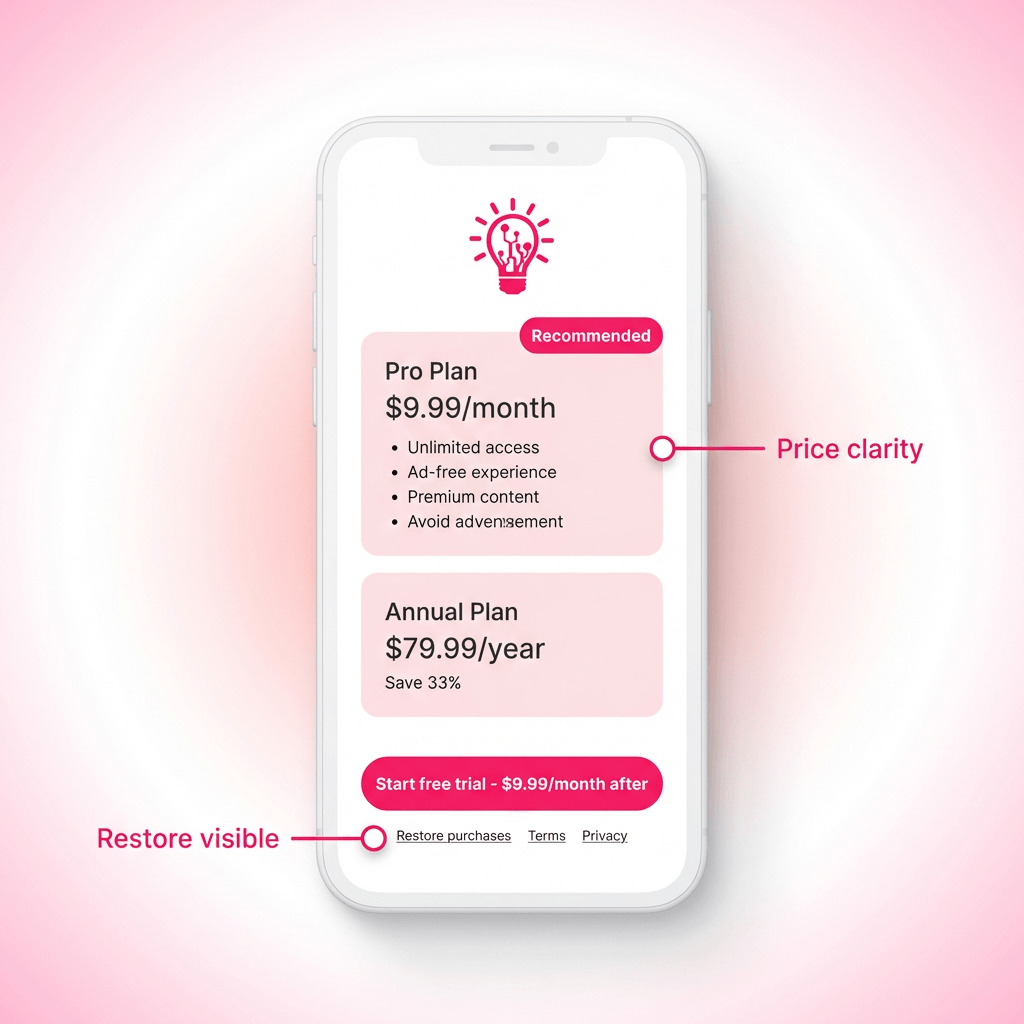
a single phone screen with header, 2 plan options, one “recommended” badgePaywalls get blamed for “ruining” UX, but the real problem is usually the same two things: they show up abruptly, and they feel opaque. A well-designed paywall can lift conversion by 50% or more, which is exactly why this moment deserves the same rigor as your core flows.

Aim for gentle friction. Clear enough to prompt a decision, light enough to preserve trust. Start with transparency like putting price, renewal timing, and post-trial billing right beside the primary CTA. Do not hide auto-billing behind vague labels like “Continue.” It ties this mindset to overall build costs, noting full-featured apps can range from $25,000 to $100,000+ depending on scope, so clarity should not stop at the paywall screen. 

Use visual hierarchy instead of extra steps. One bold header, one recommended plan, and a single high-contrast button that states the outcome plainly (“Start free trial - $X/month after”) reduces cognitive load. The draft notes that in their tests, clear amounts and dates beat clever copy. 

Keep the paywall dismissible, with secondary options (Restore, terms) visible but low-emphasis so users do not feel trapped. On iOS, Apple requires a clearly visible restore purchases option, so its placement should be deliberate, not an afterthought. Then measure taps and drop-offs relentlessly.

Timing-Free To Paid Transitions

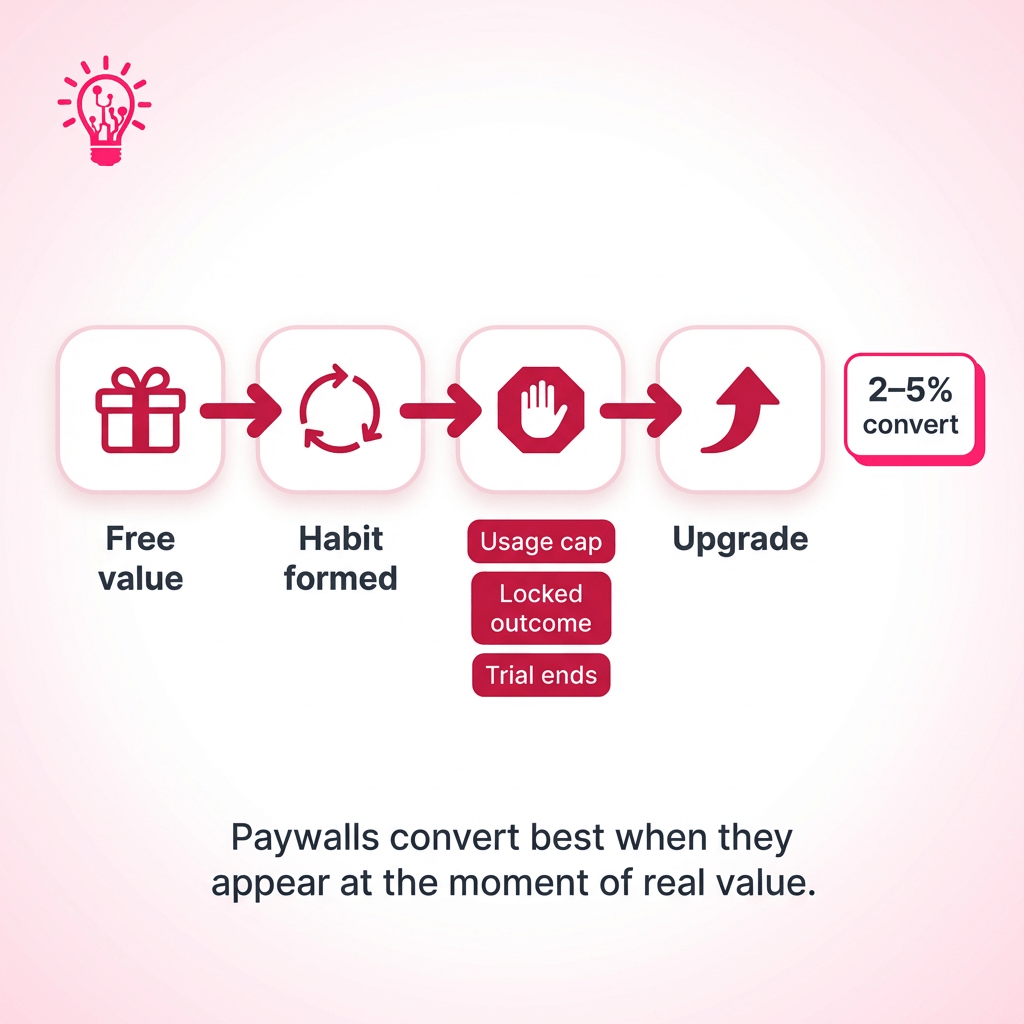
Freemium lives or dies on a thin slice of users who choose to pay, so timing matters as much as pricing. You are not chasing 100% conversion. You are optimizing the 2–5% that funds the rest, by finding the moment value feels undeniable.

That moment is usually behavioral, not calendar-based. Watch cohorts, not vanity totals, to spot those inflection points. Track free-to-paid conversion and activation together so you can tell the difference between “useful prompt” and “annoying friction.”

At AppMakers USA, we watch cohorts, not vanity totals, to spot those inflection points. We monitor metrics like free-to-paid conversion rate and activation to validate that these triggers are working rather than just adding friction.

Trigger upgrade prompts when behavior predicts willingness, not when the team gets impatient. One advantage of freemium over time-limited trials is that habits can form before the user decides to pay.

How to Keep Freemium Apps Ethical Long-Term

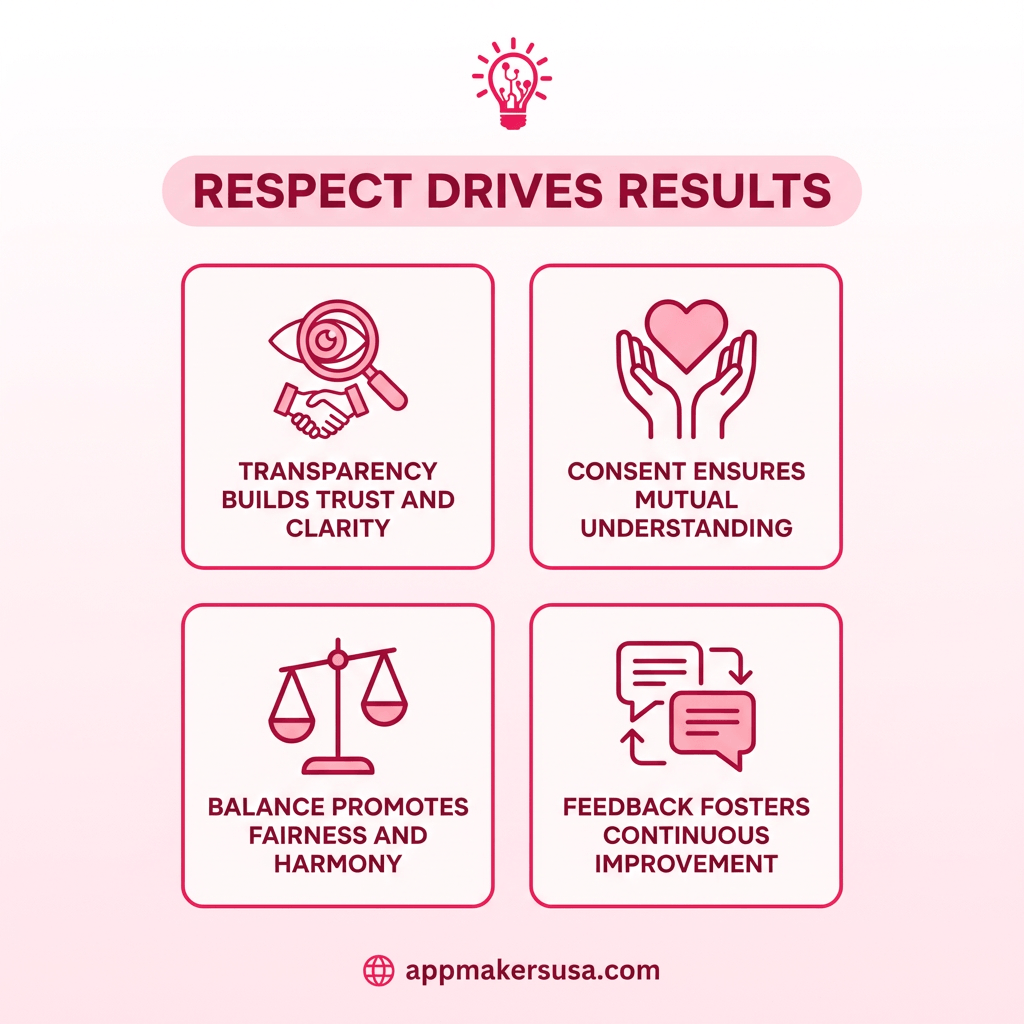
four tiles with icons that represents Transparency, Consent, Balance, Feedback

Ethics in freemium is not a nice extra. It is how you protect trust, retention, and revenue without burning users out. If you use AI or machine learning to personalize experiences, say what inputs you use, what the user gets from it, and how they can control it.

Start with transparency and consent. Explain what you collect, ask permission before you take it, and keep privacy controls obvious. Disclose third-party sharing and monetization instead of hiding it behind dark patterns. Free tiers often ask for more permissions than paid versions, so ethics means collecting only what the core features actually need.

Use tiers to give choice, not frustration. Audit monetization flows against privacy regulations and your own internal standards. The free tier should be useful. The premium tier must deliver real value. Your free tier should be useful; your premium tier must deliver value. 

For example, Tel Aviv startups using AI agent development for customer support should apply these same ethical standards to automation workflows and data integrations.

Ethical focusPractical question
Data transparencyDo users know what you track?
Consent & privacyCan they opt in and out?
Monetization balanceWould you accept these offers yourself?
Community feedbackDo you ship changes users ask for?

AppMakers USA typically treats ethics as part of the product spec, not a policy doc.

Shir Keren

Shir Keren

Shir Keren is a Project Manager and QA Analyst at AppMakers LA, where she helps turn complex ideas into polished, high-performing mobile and web apps. With experience across project management, quality assurance, and workflow optimization, she brings structure, clarity, and user-focused thinking to every build.

Ready to Develop Your App?

Partner with App Makers LA and turn your vision into reality.
Contact us

Frequently Asked Questions (FAQ)

Freemium fits when your product is cheap to serve at scale, the free tier can deliver real value fast, and premium unlocks clear outcomes. If users need to pay before they “get it,” conversion and retention both suffer.

You track free-to-paid conversion first; SaaS apps average roughly 3%. Add 30- and 90-day conversion, activation events, feature adoption, and retention. When these rises and segments reveal power users, you’re ready to launch a paid tier.

Yes, if you gate advanced workflows, admin controls, integrations, and reporting. B2B freemium is less about virality and more about proving value inside an account, then expanding seats or capabilities.

You should budget like you're building a two-story house: $40k–$100k for core free features, then another 20–40% for premium, plus $5k–$15k discovery and $5k–$30k yearly maintenance; AppMakers USA helps prioritize ROI through behavior-driven roadmapping.

We usually start by mapping the free-to-paid journey, then instrumenting activation, retention, and paywall events so decisions are data-backed. From there, we help teams iterate the tier design and upgrade timing without turning the product into a pressure machine.

See more
Chevron-1

Design the System, Not the Trick

Freemium works when it respects how people actually build habits. Users stay when the free tier delivers a real win, and they pay when the upgrade protects progress or removes friction they have already felt. If you have to pressure someone into paying, the product did not earn it.

Treat freemium like an operating model. Define the behavior you are trying to reinforce, instrument it, then improve the loop without turning the experience into a slot machine. Keep your ethics bar high, because trust is what keeps retention from collapsing the moment competitors copy your features.

If you want a clear read on whether your free tier, habit loop, and paywall timing are working together, AppMakers USA can run a focused review and translate it into a practical experiment plan your team can ship. Schedule a consultation through our contact page.


Exploring Our App Development Services?

Share Your Project Details!

Vector-60
We respond promptly, typically within 30 minutes!
Tick-4
  We’ll hop on a call and hear out your idea, protected by our NDA.
Tick-4
  We’ll provide a free quote + our thoughts on the best approach for you.
Tick-4
  Even if we don’t work together, feel free to consider us a free technical
  resource to bounce your thoughts/questions off of.
Alternatively, contact us via phone +1 310 388 6435 or email [email protected].
    Copyright © 2026 AppMakers. All Rights Reserved
    Follow us on socials:
    linkedin facebook pinterest youtube rss twitter instagram facebook-blank rss-blank linkedin-blank pinterest youtube twitter instagram